Why I Switched My Hotel's Bed Sheets to Welspun: A Cost Controller's Honest Take
I'm going to say something that sounds wrong: cheap bed sheets are a luxury. Not because they're expensive—they're not. They're a luxury because only a business with money to burn can afford the problems they bring.
I've been a procurement manager at a mid-sized hospitality group for six years. I manage a linen budget of roughly $180,000 annually, and I've documented every single order in our cost tracking system. So when I tell you that switching our entire property to Welspun bed sheets saved us about $8,400 a year, I'm not guessing. I'm reading from an invoice log.
When I first started managing vendor relationships, I assumed the lowest quote was always the best choice. Three budget overruns later, I learned about total cost of ownership.
Let Me State This Plainly
Efficiency is competitiveness. Not price. Not the cheapest quote. Efficiency. In the textile industry, efficiency separates the vendors who help you sleep at night from the ones who give you stress dreams about stained towels.
And that's exactly why I stopped buying the budget option for our hotel bedding.
Why I Stopped Chasing Cheap Quotes
When I compared eight vendors over three months using our total cost of ownership spreadsheet, the results were honestly embarrassing. I had been fooled by sticker prices for far too long.
Here's the math, simplified:
- Vendor A (budget): $4.20 per fitted sheet. Lasted 14 months. After two years, total cost per sheet including replacements: $12.60.
- Vendor B (premium): $7.80 per fitted sheet. Lasted 30+ months. After two years, total cost per sheet: $9.20.
That's a 27% difference hidden in what looked like a cheaper choice. (Note to self: should have built that calculator years ago.)
The conventional wisdom is to always get multiple quotes. My experience with 200+ orders suggests otherwise: relationship consistency often beats marginal cost savings. Welspun doesn't just supply sheets—they supply a predictable supply chain. And in hospitality, predictability is money.
What I mean is that the 'cheapest' option isn't just about the sticker price—it's about your housekeeping team spending 20% more time on touch-ups, the guest complaint emails you don't want to draft, and the hidden cost of early replacements. The vendor promised delivery by Friday. They missed it. Again. That alone cost us a night of overtime.
GOTS: The Standard You Can't Afford to Ignore
Now let's talk about the Global Organic Textile Standard (GOTS). I used to think it was just a marketing label. It's not. GOTS is a full supply-chain manufacturing standard—environmental and social criteria, chemical restrictions, even wastewater treatment. And it matters for your budget in ways you don't expect.
Hotels are increasingly being asked by corporate clients and group bookers about sustainability practices. If you can say your linens are GOTS-certified, you can win contracts. If you can't, you lose them. That's a direct cost impact.
Welspun's Eco Dry line, for example, is GOTS-certified. It uses less water and energy in the laundering process—something that our facilities manager noticed within two wash cycles. And because the fibers are organic, the sheets stay softer longer. Lower replacement rates. Fewer complaints. Better reviews.
According to the Global Organic Textile Standard (global-standard.org), certified textiles reduce the risk of failed audits and rejected shipments. For a procurement manager, that's worth a premium on its own.
Microfiber, Wash Cycles, and the Real Cost of Ignorance
Here's where this gets personal. If you've ever had to explain a stained towel to a guest, you know that sinking feeling. But here's something less obvious: how you wash your microfiber cloths in the washing machine affects your entire linen budget.
Microfiber is everywhere in housekeeping—it's what your team uses to wipe down bathrooms, polish mirrors, and clean surfaces. But microfiber is fragile. If you wash it with fabric softener or high heat, you melt the micro-fibers. They lose their absorbency, they shed lint, and they end up on your fresh bed sheets. Guess what that looks like? A guest complaint. And guest complaints cost you.
The upside of fixing this was maybe $2,000 in carpet cleaning savings. The risk was zero—it was just changing a wash cycle. But I kept asking myself: why didn't we figure this out earlier? (I really should have documented this before.)
So, how to wash microfiber cloth in washing machine? Short version: cold water, mild detergent, no fabric softener, and either hang dry or tumble on the lowest setting. That's it. It's not complicated. The issue is that most people don't realize the inefficiency is costing them money. The same logic applies to your bed sheets.
What About Color and Consistency?
In the textile industry, color consistency is a huge hidden cost. If a bed sheet fades unevenly after ten washes, you can't match it to the rest of the set. So you replace the entire set, not just one sheet.
That's why I verified our Welspun samples against the Pantone Color Matching System. For brand-critical colors, the industry tolerance is Delta E < 2. Below that, the difference is invisible to most guests. Above 4, anyone can see it. (Reference: Pantone Color Matching System guidelines.) Welspun has been the only vendor in the last six years that consistently hit that tolerance across repeat orders. That consistency alone eliminates the "one odd linen" problem.
The Pushback I Always Get
Every time I present this data, someone says: "But the premium vendor is too expensive. We can't afford it."
Fine. Let's look at the facts.
In Q2 2024, I compared costs across six vendors for a quarterly order of 400 bed sheets. The "cheap" option came in at $1,200 less upfront. Seven months later, 40% of those sheets were showing signs of pilling. Our guests noticed. Our review score dipped, and the marketing team had to throw together a local ad campaign to smooth things over. We spent $1,300 more in guest recovery—more than we saved upfront.
Was it worth it? No.
I'm not saying every premium brand is worth the money. That's lazy thinking. But when you find a vendor whose supply chain is efficient, whose quality holds up under real-world washing, and whose standards (GOTS, Quik Dry, color consistency) reduce your operational risk—you don't nickel-and-dime them.
The Bottom Line
Honestly, I think the textile industry is moving in one direction: efficiency. Not just in production, but in the entire lifecycle of the product. GOTS certification. Quick-dry technology. Water-saving manufacturing. These aren't just buzzwords. They're cost-saving tools.
Switching to Welspun bed sheets cut our turnaround from 5 days to 2 days in the laundry cycle because the Quik Dry fabric spends less time in the dryer. That's not a marketing claim—that's a measurable reduction in energy and labor costs. The automated process eliminated the data entry errors we used to have. The eco line reduced our water usage. The GOTS certification earned us a corporate account that pays us $30,000 a year in room nights.
So no, I'm not going to soften this: if you're still buying the cheapest bed sheets available, you're not saving money. You're just hiding your costs in late-night replacement orders, frayed hems, and guest complaints.
Efficiency is competitiveness. Believe me—I check the numbers.
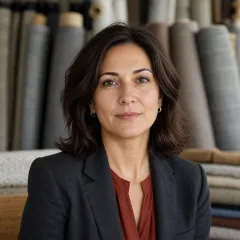
Lucia Bianchi
Lucia Bianchi is a woven apparel-fabric analyst covering cotton, linen, wool, rayon, denim, shirting, twill, satin, poplin, and blended garment fabrics. She applies the ISO 1833 series for fibre composition and ISO 105-C06 for laundering colourfastness while checking GSM, yarn count, usable width, shrinkage, skew, shade grade, drape, and surface defects. Her specification guides help designers, sourcing teams, and mills align fibre claims, lab dips, bulk tolerances, care conditions, and garment performance before production approval.